Needle to the Groove: Why Collectors Are Obsessed with Japanese Vinyl Pressings
Thick cardstock jackets, a paper obi strip, dead-silent surfaces — Japanese pressings became the gold standard of vinyl, and the culture built around listening to them gave rise to the modern listening bar.
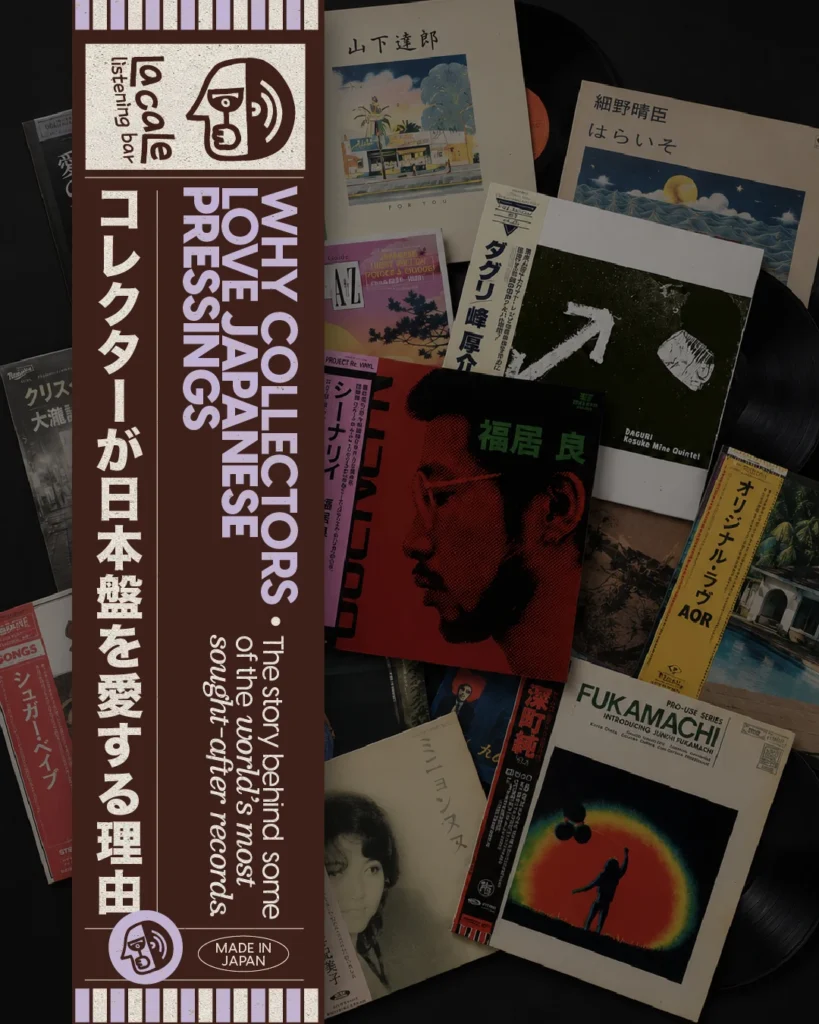
To the uninitiated, vinyl record collecting might seem like a simple hunt for rare titles or iconic album covers. But step into an audiophile’s sanctuary — or pull up a stool at a hi-fi listening venue like La Cale Listening Bar — and you will quickly notice a pattern. When serious collectors flip through crate after crate, their hands freeze on specific sleeves: thick cardstock jackets wrapped in a distinctive vertical paper strip, bearing Japanese kanji.
Japanese pressings have attained legendary status among vinyl enthusiasts worldwide. What began as a practical solution for importing Western music into post-war Japan evolved into the gold standard of sound fidelity, art preservation, and audiophile culture.
Here is the investigative breakdown of how an island nation transformed vinyl pressing into an art form — and how that obsession birthed the global listening bar movement.
1. Sound Engineering as Craft: The Search for Silent Vinyl
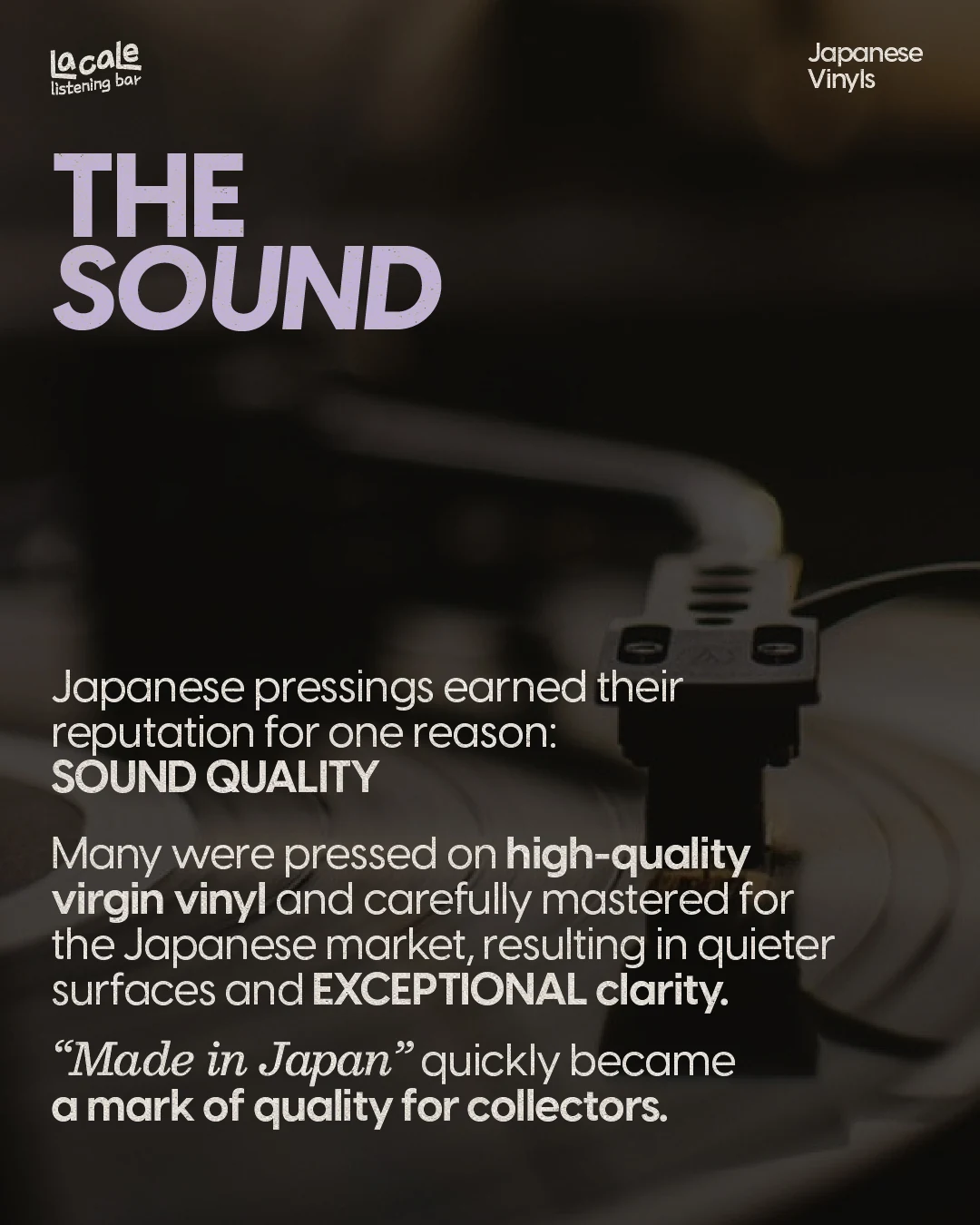
During the vinyl boom of the 1970s and 1980s, Western record pressing plants were pumping out millions of copies a week. High demand led many US and European pressing plants to economize by recycling old, un-recycled vinyl scrap or using thin, flexible polyvinyl compounds that introduced surface noise, clicks, and pops straight out of the shrink-wrap.
Japan took a fundamentally different path.
Engineers at legendary Japanese manufacturing houses — such as JVC (Victor Company of Japan), Toshiba-EMI, and Nippon Columbia (Denon) — treated vinyl pressing with the precision of high-end metallurgy.
- Pure Virgin Vinyl: Japanese plants primarily used 100% virgin vinyl free from recycled debris. JVC famously developed Super Vinyl (later marketed in the West as Mobile Fidelity’s Quiex vinyl) — a proprietary compound so pure and dense that it allowed for incredibly shallow, microscopic groove cuts with virtually zero surface noise. Held up to a bright light, some of these discs are even translucent.
- Meticulous Mastering: Japanese audio engineers mastered records tailored to high-end domestic Hi-Fi gear. Rather than cranking up volume levels to punch through cheap car stereo speakers, Japanese master engineers emphasized dynamic range, separation, crisp high frequencies, and low noise floors.
- Flawless Quality Control: Defect rates were notoriously low. Stamped grooves were checked meticulously, sleeves were lined with anti-static rice paper inner sleeves, and pressing machines were run at lower speeds to ensure deep, consistent groove molds.
The result? Dead-silent backgrounds that allow subtle micro-details — the rasp of a tenor saxophone reed, the quiet decay of a cymbal strike, or subtle acoustic reflections in a room — to emerge with crystalline clarity.
2. The Anatomy of the Obi Strip: From Marketing Tag to Holy Grail
Look at any Japanese import, and you’ll notice a paper band running vertically along the spine or wrapped around the outer sleeve. It is called an Obi (帯) strip, named after the traditional sash bound around a Japanese kimono.
Originally, the obi strip served a purely functional purpose. When record labels like King Records, Toshiba-EMI, or CBS/Sony imported American and European albums in the 1960s and 70s, the original album art was left untranslated to preserve aesthetic integrity. The obi strip provided crucial information for domestic buyers: translated artist names, tracklists, lyrics, context notes, liner notes, and retail prices in yen.
Because the obi was external paper packaging, most Japanese listeners in the 1970s simply tore them off and threw them away upon opening the record.
Decades later, that discarded slip of paper has transformed into a high-stakes collector indicator:
- Provenance & Authenticity: An intact, original obi proves that the sleeve was preserved as a domestic Japanese release.
- Scarcity Premium: Because so many obi strips were destroyed, an album with its original obi can command two to five times the monetary value of the exact same pressing without one.
- Collector Heritage: The obi represents an era when physical music packaging was treated as a complete tactile experience — replete with insert booklets, translated lyrics, and custom obi typography.

3. Post-War Economics & The Birth of the Jazz Kissa
To understand why Japanese vinyl pressings sound so astonishingly good, you have to understand where they were played.
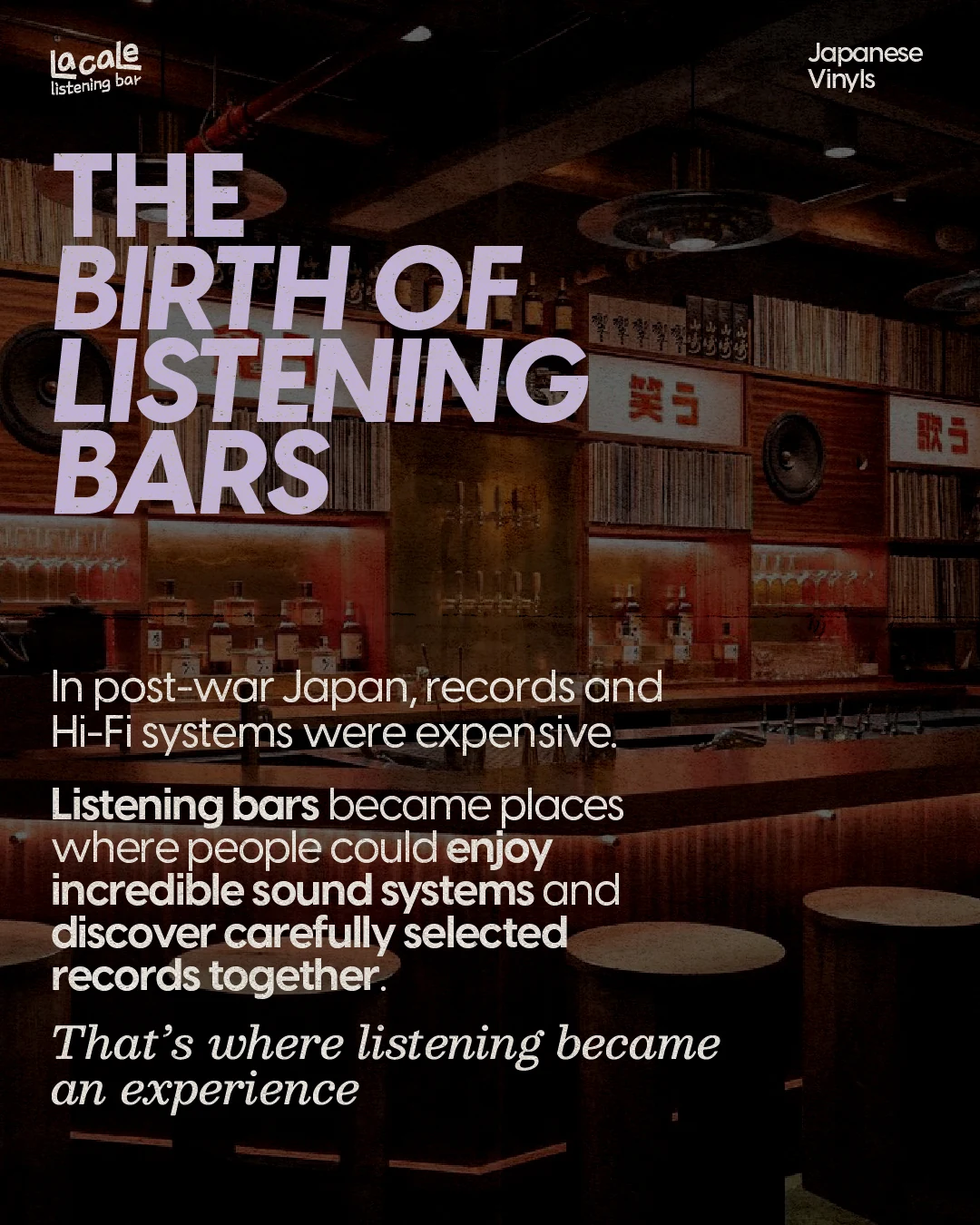
In post-World War II Japan, Western music — especially American Jazz — was in massive demand. However, import vinyl records and high-end stereo equipment were exorbitantly expensive relative to average wages. Buying a single imported Blue Note or Prestige record could cost a significant portion of a worker’s weekly pay, and imported tube amplifiers or horn speakers were out of reach for almost everyone.
This economic reality birthed an iconic cultural institution: the Jazz Kissa (ジャズ喫茶) or Jazz Listening Cafe.
Specialized coffee shops and bars began investing in state-of-the-art sound systems — featuring vintage JBL speakers, Garrard turntables, and custom tube amplifiers — and building deep libraries of imported records. Patrons would pay for a cup of black coffee or a highball whiskey, sit in quiet reverence, and spend hours immersed in music reproduced at high fidelity.
In a Jazz Kissa, music wasn’t background noise. Talking over the record was strictly discouraged. The record was the main event.
This deep culture of active, communal listening raised the bar for domestic audio manufacturing. Japanese record plants had to produce silent, dynamic vinyl because their audience was listening through microscopic detail on massive horn speakers in dedicated sonic sanctuaries.
4. The Global Revival: Bringing Japanese Pressing Culture to La Cale Listening Bar
Today, as digital streaming reduces music to compressed background noise on tiny phone speakers, the philosophy of the Japanese listening bar is undergoing a global renaissance.
Around the world, music lovers are seeking out spaces that slow time down — spaces where analog craftsmanship, acoustics, and intentionality take center stage.
At La Cale Listening Bar, we honor this legacy every single day.
Our record collection is curated with a deep reverence for Japanese pressings, rare original masters, and analog treasures across jazz, soul, funk, ambient, and world grooves. When you take a seat at La Cale, you are not just grabbing a drink; you are stepping into a ritual that began in post-war Tokyo:
- Audiophile Acoustic Design: Every corner of La Cale Listening Bar is tuned to showcase the warmth, depth, and silent surfaces of virgin vinyl.
- Crated Precision: From classic 1970s Japanese pressings complete with their original obi strips to contemporary audiophile cuts, our rotary turntables spin music the way artists intended it to be heard.
- Intentional Community: We bring people together over curated sound, craft cocktails, and the tactile magic of physical records.
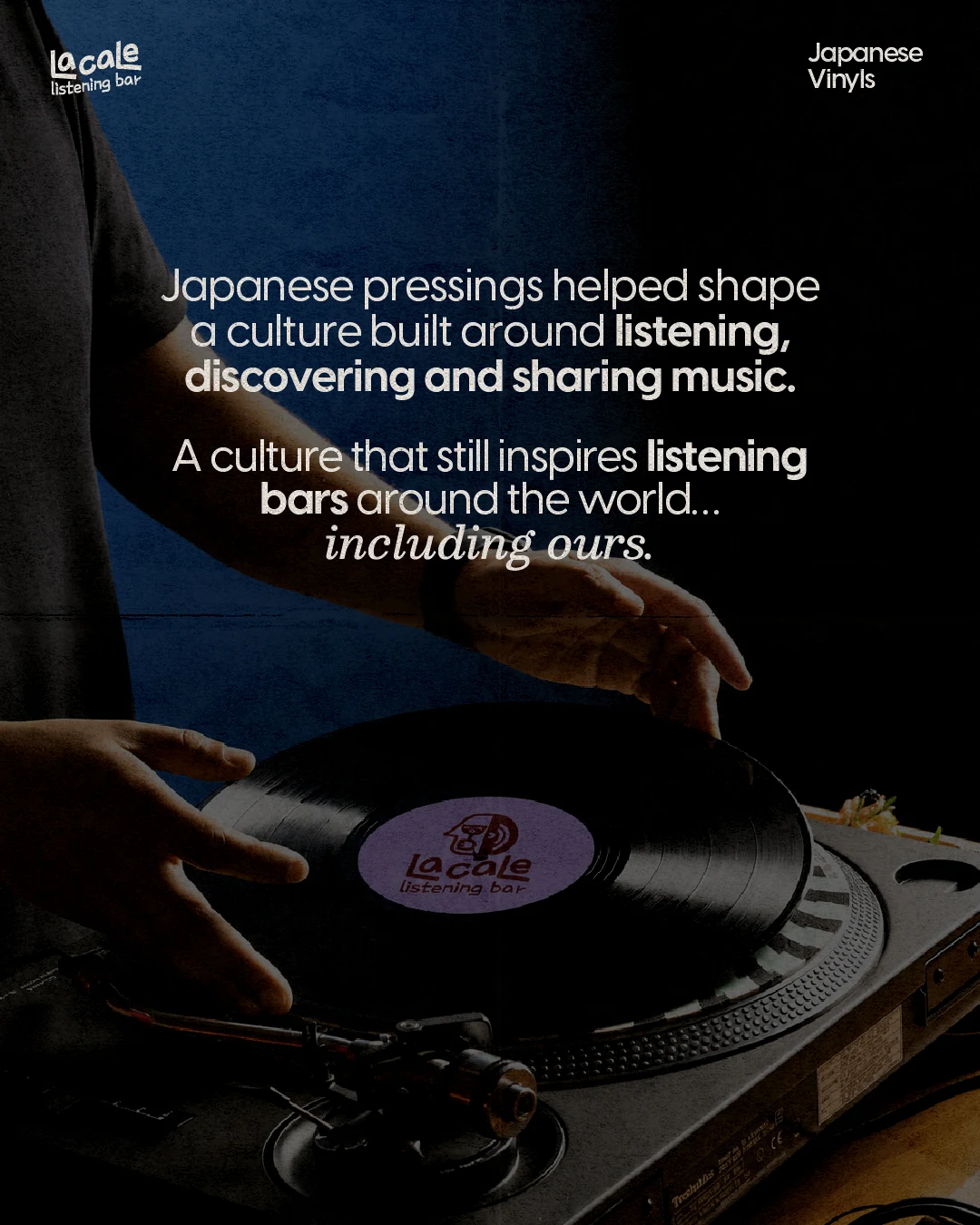
Japanese pressings proved that listening to music could be an art form in itself. At La Cale Listening Bar, that spirit lives on — one needle drop at a time.