Handmade in Kingston: How Jamaica Invented Sound System Culture and Rewired Global Music
Long before festival mainstages and club rigs, modern bass culture was born out of raw necessity on the concrete lawns of West Kingston — and its DNA still runs through every listening room built with the same reverence for sound.
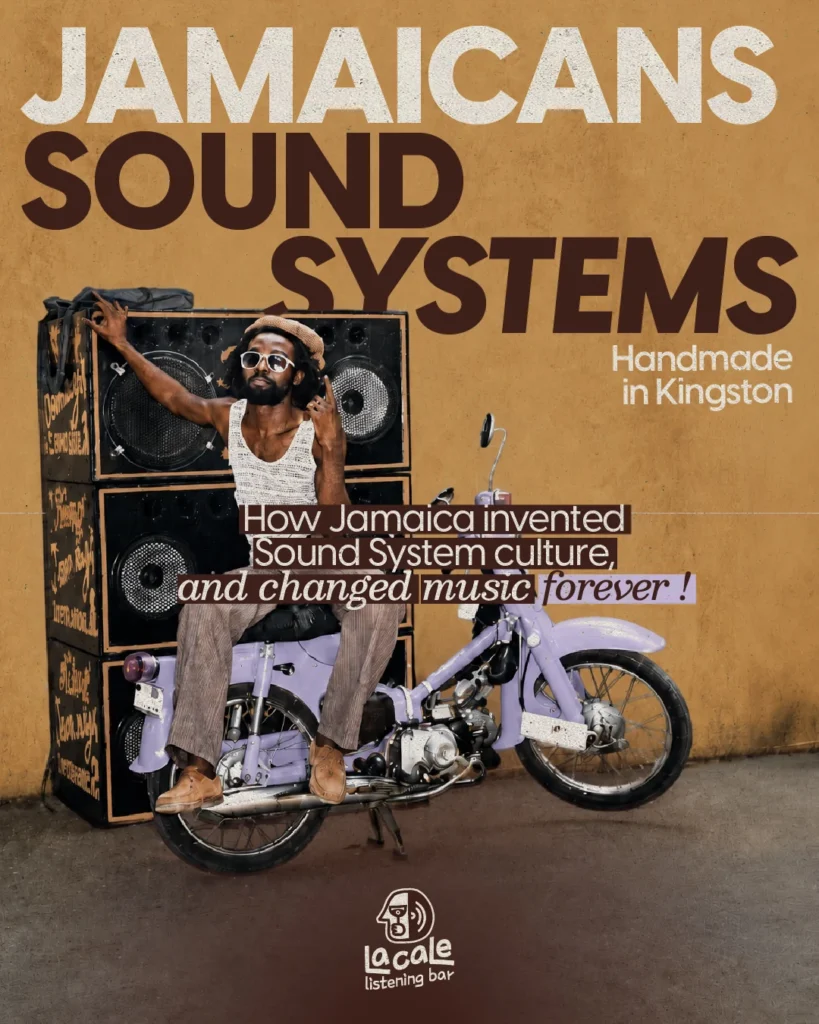
Long before festival mainstages, megawatt club rigs, or bedroom DJ setups existed, modern bass culture was born out of raw necessity on the concrete lawns of West Kingston.
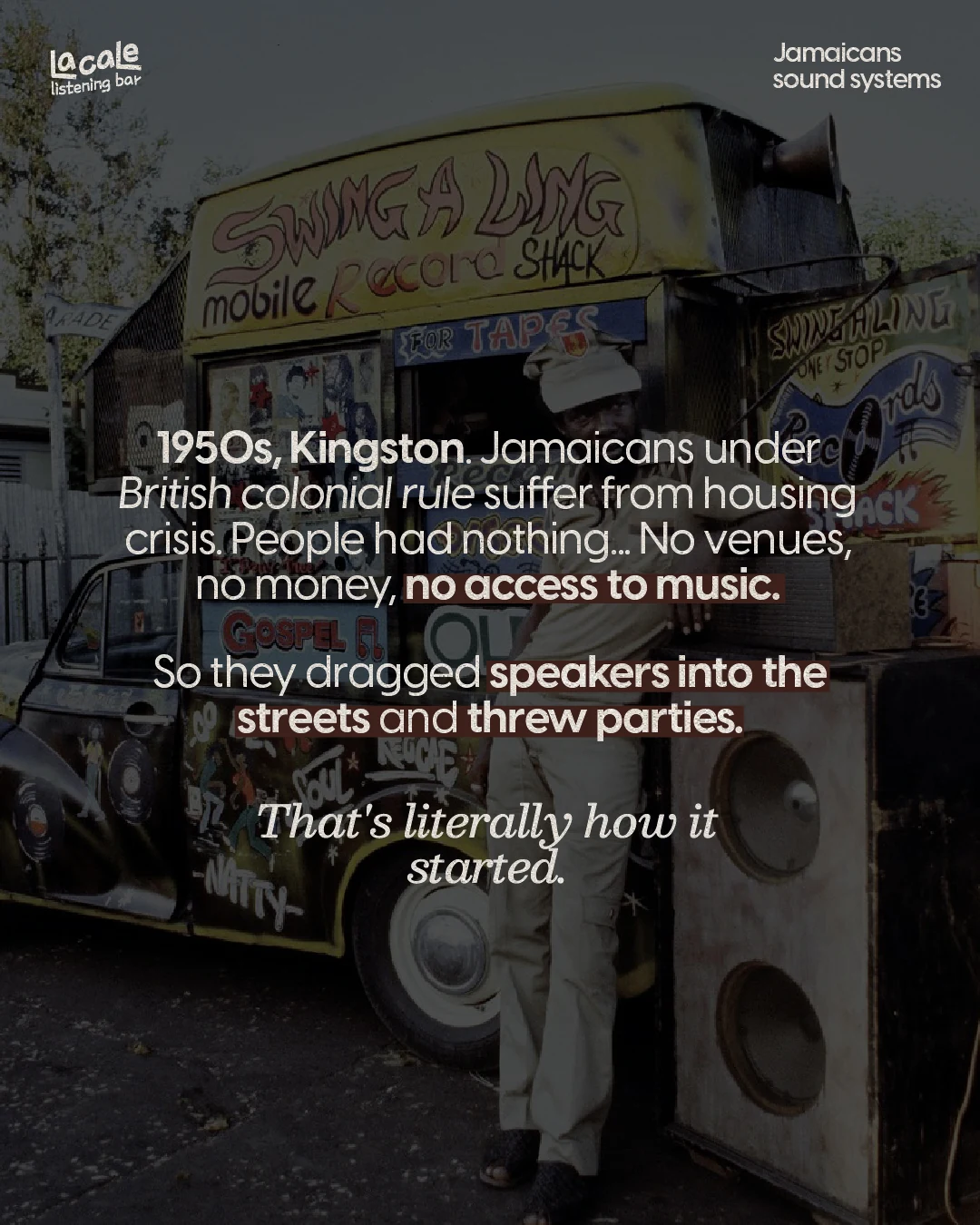
In the 1950s, Kingston was an island capital living under British colonial rule. Economic hardship was everywhere, housing was scarce, and ordinary working-class Jamaicans were shut out of formal venues, upscale nightspots, and mainstream radio broadcasts. They had no access to high-end audio gear, let alone public spaces that welcomed them.
So, they built their own.
1. Born on the Block: Kingston in the 1950s
When commercial radio stations ignored the music of the people, pioneers like Clement “Coxsone” Dodd, Duke Reid “The Trojan,” and Tom “The Great” Sebastian took matters into their own hands. They bought second-hand amplifiers, wired custom speaker boxes out of raw timber, mounted them onto flatbed trucks or pushcarts, and wheeled them straight into open-air yards like Beat Street and Back-o-Wall.
These street sessions — known as “lawns” — were the original public discos. For a few pennies, anyone could walk into a yard, buy a cold Red Stripe, and feel low-end frequencies that no off-the-shelf radio set could ever deliver.
Sound system culture didn’t start as an industry; it started as a grassroots sanctuary.
2. More Than Speakers: The Anatomy of a Crew
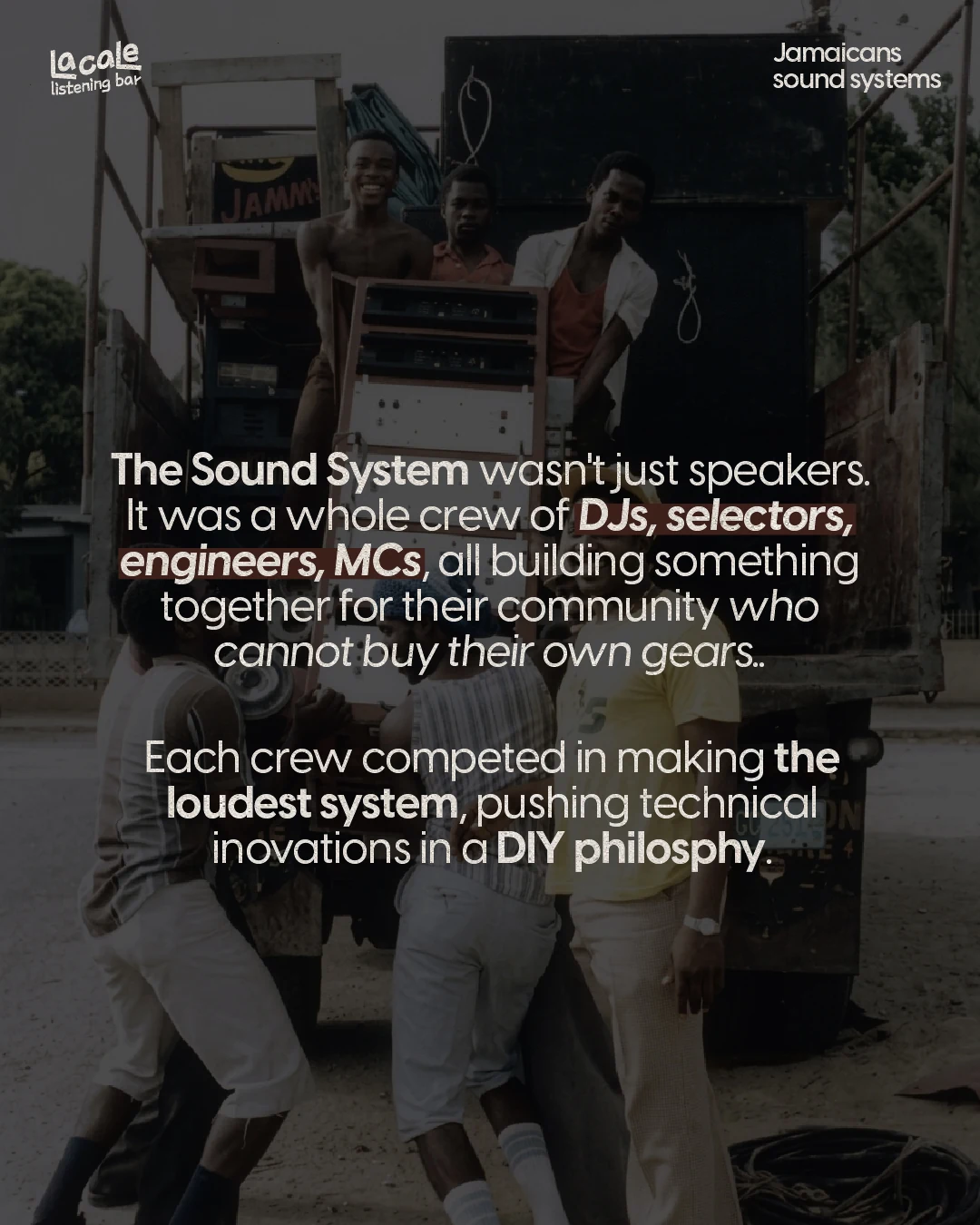
A sound system was never just a pile of wood and wire. It was a fine-tuned, highly disciplined unit that functioned like a sports team or a tight-knit guild:
- The Sound Owner / Operator: Financed the rig, secured the venue, and managed the brand.
- The Selector: The crate-digger responsible for finding exclusive American R&B 7-inch singles, and later, unreleased local cuts.
- The Engineer: The technical genius who soldered valve amps, customized crossovers, and tuned the bass bins to push maximum sound pressure without blowing the transformers.
- The Deejay (MC): The voice on the microphone who hyped the crowd, chanted over instrumental flips, and delivered improvised poetry.
Because every crew wanted to be the loudest and crispest in town, a fiercely creative arms race broke out. Sound clashes — legendary musical duels where two or more systems set up across a yard to battle for crowd applause — pushed technical innovation at breakneck speed. To gain an edge over rivals, selectors began scraping artist names off record labels so competitors couldn’t identify the songs, and engineers started cutting one-off acetate discs known as dubplates.
3. The Catalyst for Modern Music
This intense street level rivalry did something historic: it forced Jamaica to create its own music industry.
When American R&B records became harder to import in the late 1950s, local sound owners began setting up rudimentary recording studios to produce their own exclusive rhythm tracks. That DIY impulse sparked an extraordinary rapid evolution:
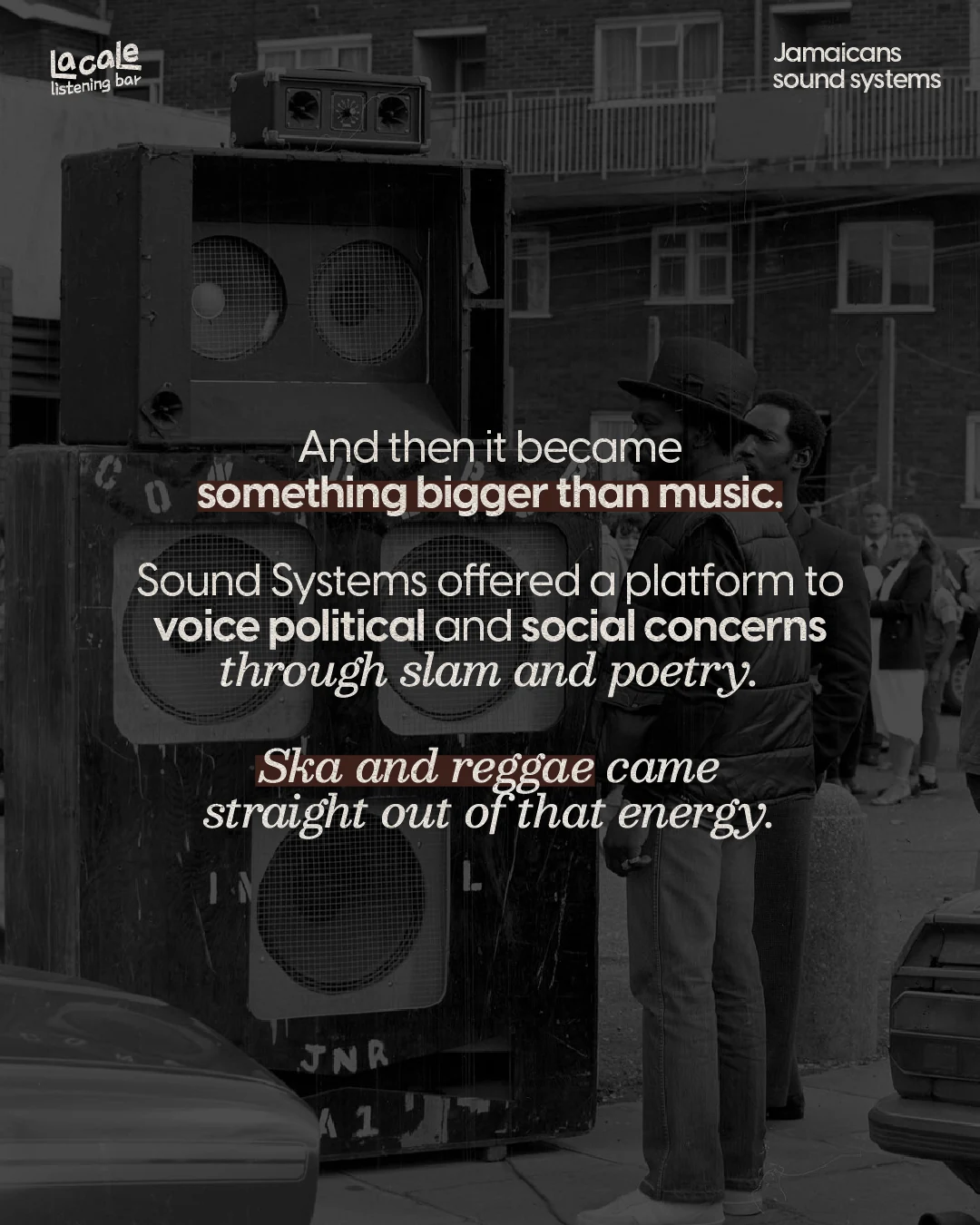
- Ska (Late 1950s–1960s): Fusing American rhythm-and-blues with indigenous Mento and Afro-Jamaican Nyabinghi drumming patterns.
- Rocksteady (Mid-1960s): Slowing down the tempo to let sub-bass tones breathe and vocal harmonies take center stage.
- Reggae & Dub (Late 1960s–1970s): Pushing bass lines to the front, stripping vocals back, and treating the mixing console itself as a live instrument using delay, reverb, and spatial echo.
At the same time, the Deejay’s habit of rhyming and talking over instrumental “riddims” (toasting) laid the exact blueprint for what American hip-hop would become a decade later when Jamaican immigrants like DJ Kool Herc introduced the format to the Bronx.
4. The Migration: Landing in the UK and the Free Party Movement
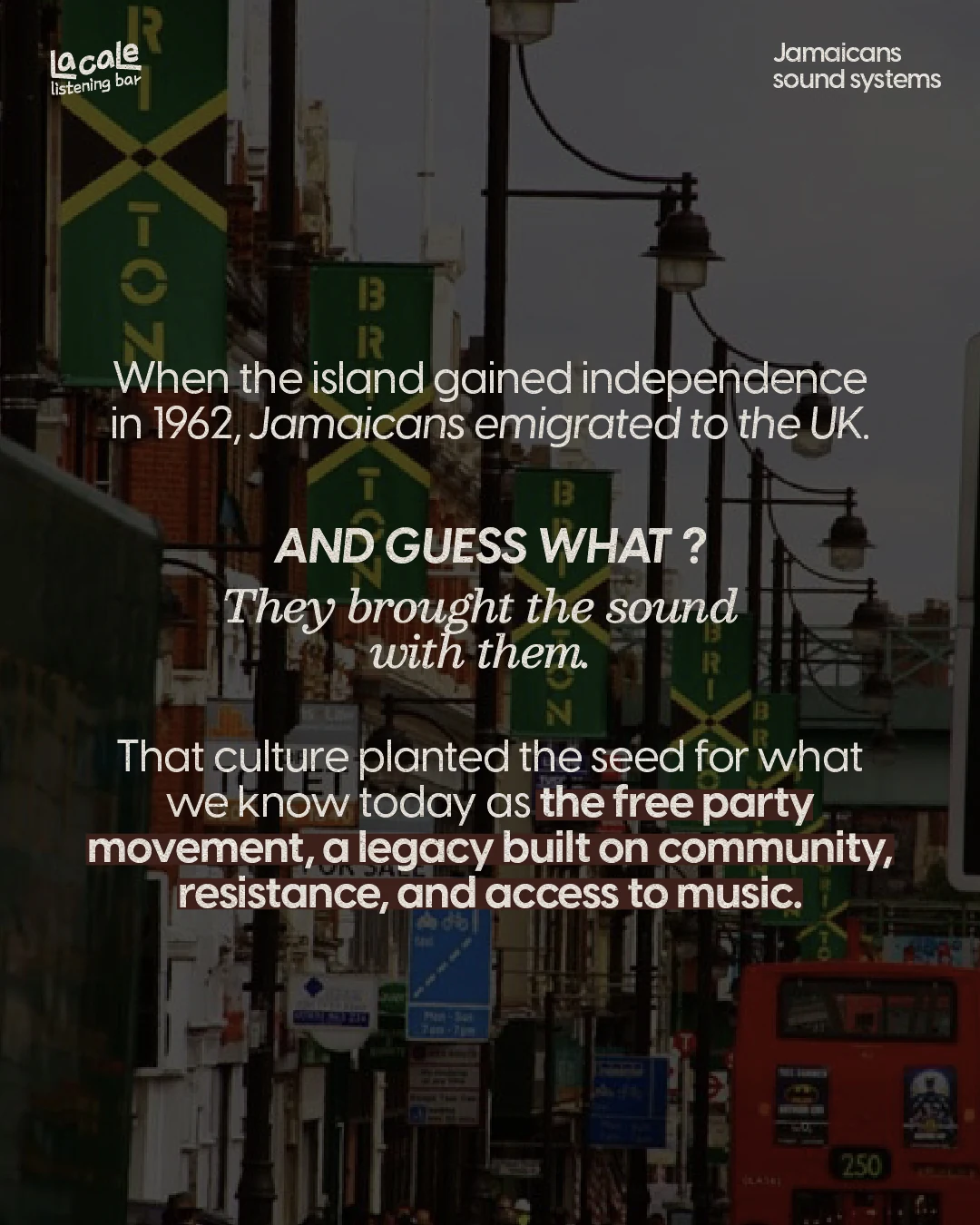
When Jamaica gained independence in 1962, thousands of Jamaicans emigrated to the United Kingdom as part of the Windrush generation. They faced harsh social environments, discriminatory door policies at British pubs, and a cold climate.
They brought the sound with them.
In London, Bristol, Birmingham, and Manchester, Jamaican families turned residential basements into “blues parties” and hauled custom-built rigs into street festivals like the Notting Hill Carnival. Rigs built by pioneers such as Duke Vin, Count Suckle, and later Jah Shaka redefined British urban culture.
That physical, community-first ethos broke down racial barriers and directly seeded:
- UK Dub & Reggae sound systems
- The 1980s & 90s Free Party and Rave movement
- Jungle, Drum & Bass, Dubstep, and Grime
The modern concept of a party built around physical weight in the low end — where the sound system is the altar and access to music is universal — stems directly from 1950s Kingston.
The Legacy Lives On: From Kingston Yards to Modern Sound Spaces
Today, the spirit of sound system culture isn’t just kept alive in outdoor field parties — it informs how true music lovers experience sound everywhere in the world. It taught us that music sounds different when played with reverence, high fidelity, and intention.
Whether it’s a heavyweight stack in an outdoor arena or a carefully tuned analog system in a cozy audio sanctuary, the philosophy remains unchanged: sound should bring people together, evoke emotion, and offer an accessible refuge from everyday life.
If you are in Morocco and want to experience that same deep respect for rich audio, acoustic warmth, and music curation, you can feel that global lineage firsthand at La Cale Listening Bar and La Cale Club in Rabat — spaces built for those who understand that listening to music is an art form in itself.